ENTREPRENEUR · STRATEGIST · INVESTOR
Making the decision is only the beginning.
Know when to Hold, when to Repair, and when to Review.

Kimberley George’s work examines what happens after consequential decisions are made, how they become operational, what pressure does to them, why sound decisions can become unstable, and when changing course is justified.
Her perspective is grounded in more than fifteen years across entrepreneurship and strategic business advisory, working alongside founders, owner-operators and organisations navigating growth, change and complex decisions.
Alongside her writing and development of the Decision Stability Framework, Kimberley retains selective private investment and equity interests in founder-led ventures.
Grounded in more than 15 years of business experience.
-
15+ Years
Entrepreneurship and Strategy
-
Original Framework
Decision Stability Framework
-
Private Investment
Selective Founder-led Ventures
A sound decision can still become unstable after it is made.
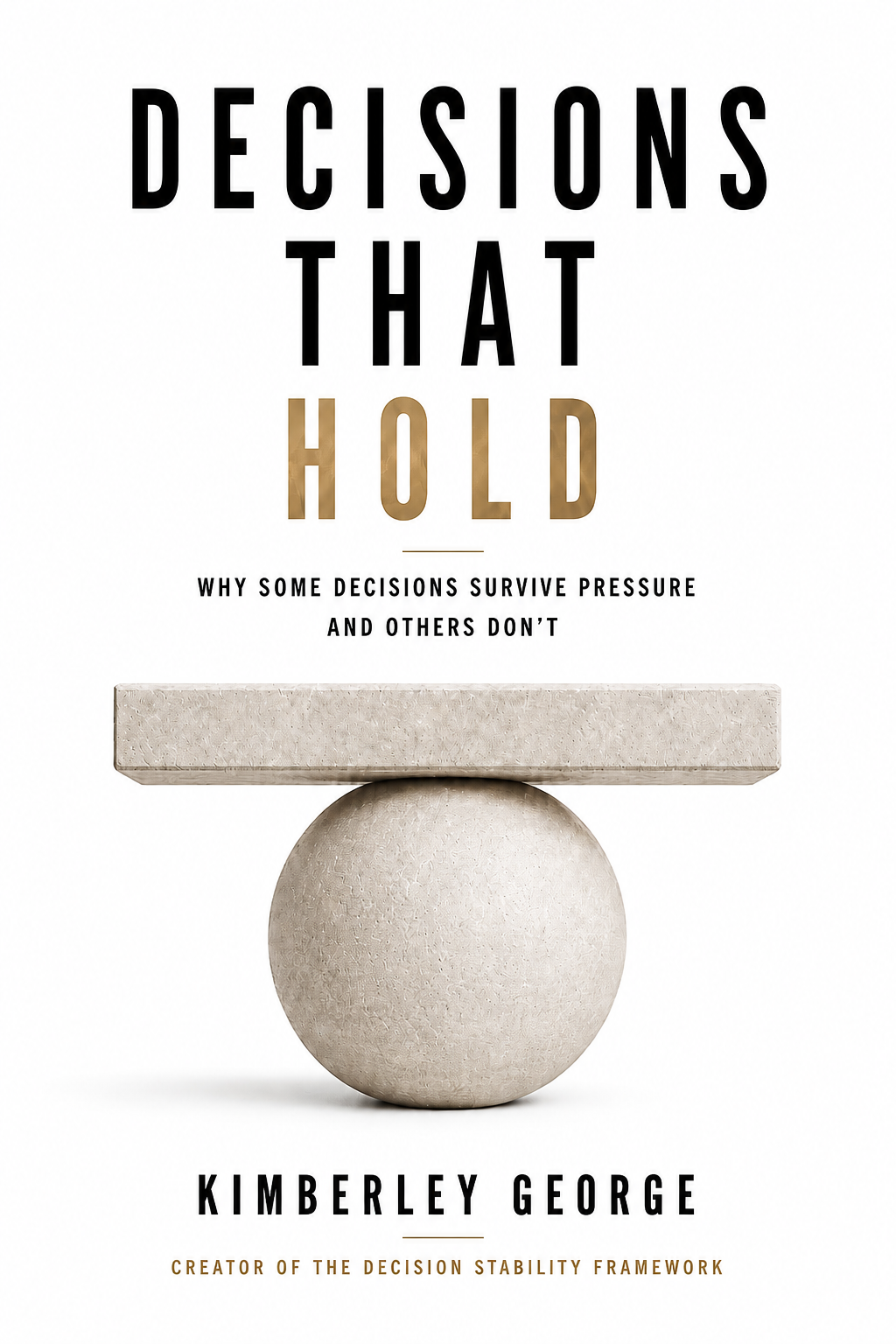
Decisions That Hold
You made the decision. You acted on it. So why does it keep asking to be made again?
Once a consequential decision enters the world, other forces begin acting on it: people push back, implementation gets messy, doubt arrives, circumstances shift and new information appears. Some of that pressure needs to be held through. Some signals a problem that needs repairing. And some genuinely earns the right to reopen the decision.
Decisions That Hold is about knowing the difference. It examines why sound decisions can quietly erode after they are made, why other decisions stay in place long after they should change, and how to protect the integrity of a decision while reality tests it.
At the centre of the book is the Decision Stability Framework, a practical, practitioner-derived framework for what happens after the choice: hold, repair, review, or reopen when the evidence warrants it.
Why some decisions survive pressure and others don’t.
Decision Stability Framework
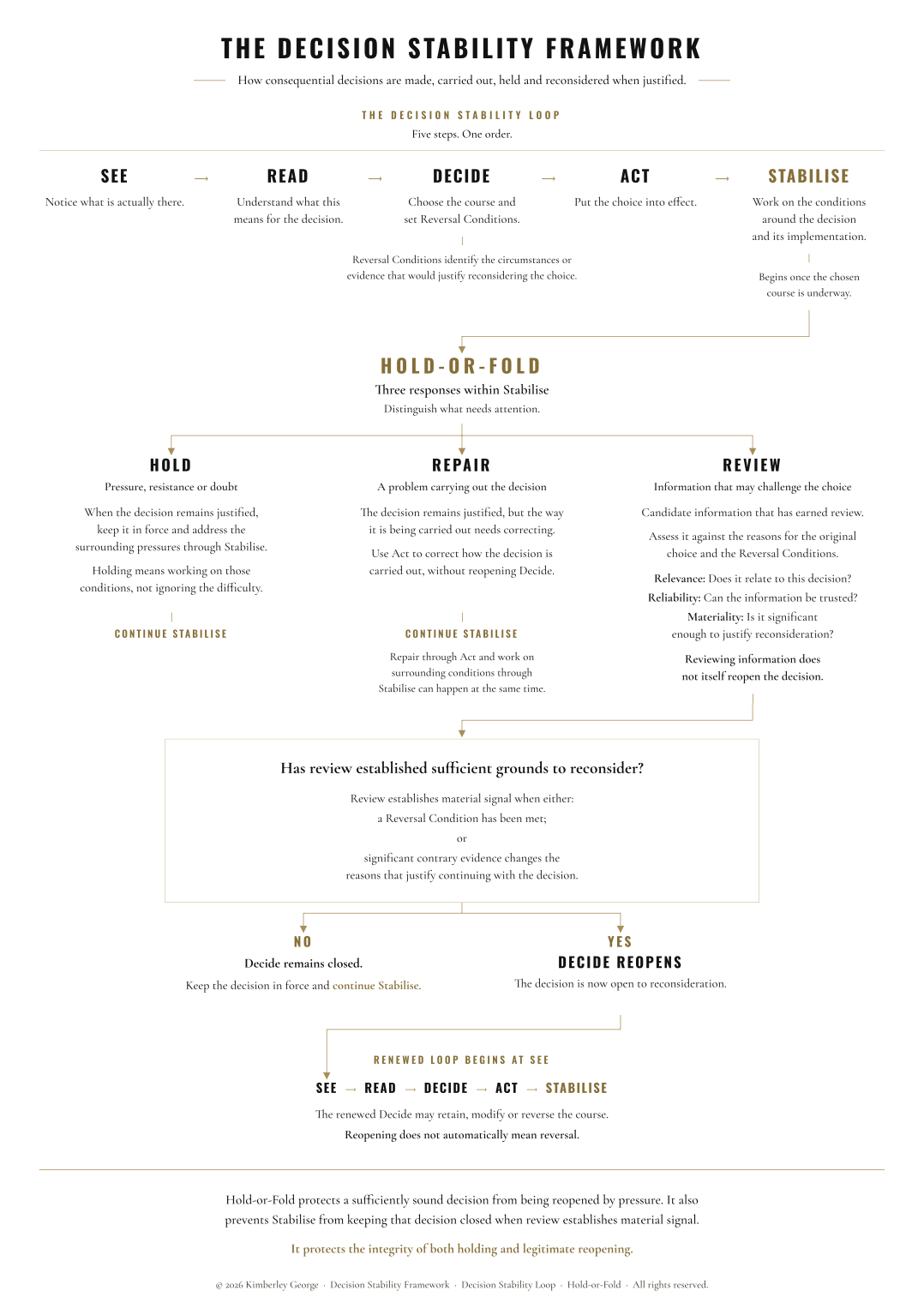
Most decision-making frameworks concentrate on getting to the choice. The Decision Stability Framework™ examines what happens next: whether a sufficiently sound decision can survive implementation, pressure, doubt and new information without being abandoned too early, or defended for too long.
Its operating architecture, the Decision Stability Loop™, follows consequential decisions through See, Read, Decide, Act and Stabilise. The distinctive work begins once the chosen course is operating in the real world.
Within Stabilise, Hold-or-Fold™ classifies what arrives after Act: pressure to hold through, an implementation problem to repair, or information that may genuinely earn review. Reopening is not triggered by discomfort, resistance or change alone. It occurs only when review establishes a material signal against criteria set before the pressure arrived.
The framework therefore addresses both sides of decision integrity: how a sound decision is protected from unnecessary reopening, and how it remains capable of legitimate reconsideration when the evidence warrants it.